产品介绍
SPECIFICATIONS OF PIPE FITTING
Materials
Type
Outer Diameter
Wall Thickness
Standard
Austenitic
Duplex Steel
Nickel Alloy
Cobalt Alloy
Ferrite
EIbow/Tee/Reducer/Cap
≤2000mm;
≤DN2000;
≤80"≤30.96mm;
≤Sch160ASTM A403
ASTM A815
EN 10253-4
ASTM B366
…Stub End
≤800mm
≤DN800
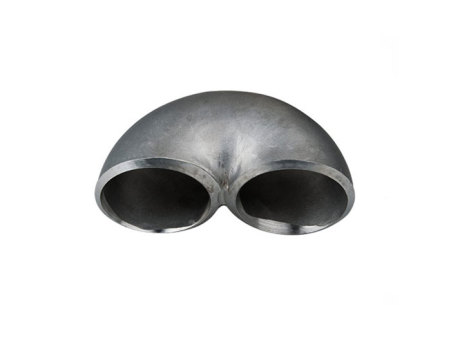
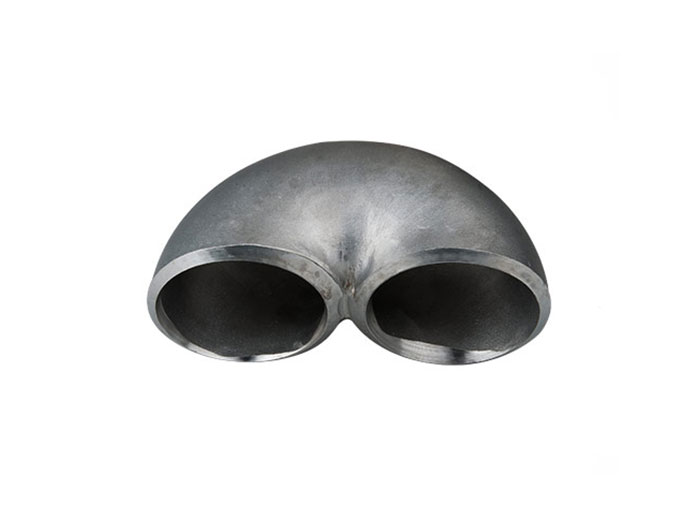
≤32"Non-standard elbow refers to elbow products that do not meet standard angles (such as 45°, 90°, 180°) or size specifications. They are usually customized according to the special requirements of customers and are used to connect pipeline systems that meet complex working conditions or non-traditional layouts. It can achieve bending at any angle (such as 22.5°, 60°, 135°, etc.), and can also customize special bending radius, wall thickness, connection method or port form according to project requirements, greatly improving the flexibility and adaptability of pipeline design. Non-standard elbows are widely used in industries such as petroleum and natural gas, chemical industry, electric power, metallurgy, papermaking, shipbuilding, nuclear power, thermal energy equipment, and construction engineering. It can help engineers achieve precise pipeline direction design, reduce the number of welds and connectors, and reduce installation difficulty and maintenance costs.
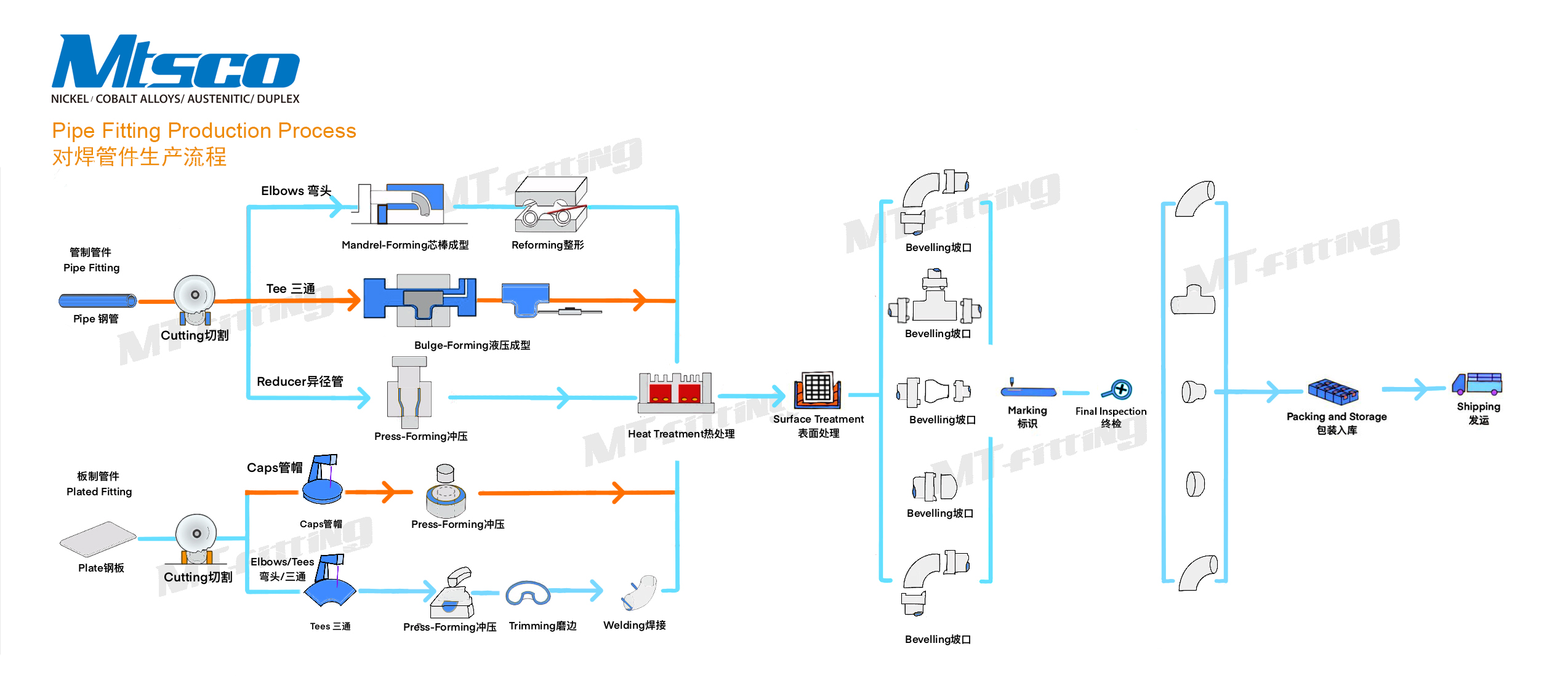
Pipe Fitting Manufacturing Process:
Cutting: Precisely size pipes to design specifications.
Forming: Shape via cold pressing, hot bending, or die forging methods.
Welding (segmented parts): Perform joint welding followed by weld seam polishing.
Heat Treatment: Mitigate internal stresses and optimize material strength.
Surface Treatment: Apply sandblasting, electroplating, or corrosion-resistant coatings.
Inspection: Validate dimensions, conduct pressure endurance tests, and execute non-destructive testing (NDT) for compliance certification.
How do we ensure the quality of pipe fittings?
1. Raw material control
Secondary verification ensures reliability
The raw materials we use are all from well-known domestic steel mills such as Baosteel, Qingshan, and Yongxin, with stable and reliable quality. Each batch of materials must be accompanied by a material warranty (MTC) and a positive material identification test (PMI) report before arriving at the factory. After arrival, we will conduct PMI analysis and related inspections again to double-verify its chemical composition and material properties to ensure that it meets production standards and customer needs.
2. Production process management
Full process tracking and quality control
Hongdi is equipped with advanced processing equipment, including CNC lathes, automatic laser cutting equipment, 1,000-ton hydraulic forming machines, elbow mandrel pushers and other key equipment. Each process is strictly controlled by experienced engineers and technicians. Quality inspectors track and take photos of key nodes throughout the process, and use standardized process flow cards for operation guidance to ensure that the products are traceable and consistent.
3. Inspection before delivery
Full inspection before delivery
MTSCO's quality inspection team conducts strict inspections on each finished product, including appearance inspection, PMI verification, size verification, quantity confirmation and non-destructive testing. According to product requirements, we will also carry out in-depth laboratory projects such as mechanical property testing, chemical analysis, and intergranular corrosion testing. For welded pipe fittings, raw materials and finished products must pass 100% ultrasonic or radiographic non-destructive testing.
In addition, we support independent audits by third-party inspection agencies such as SGS, TUV, and BV.
MTSCO has rich operating experience in packaging and container transportation. Large pieces are wrapped in plastic wrap, small pieces are sealed with foam film or plastic, and pearl cotton is added to the port position for protection. The outer packaging is handled with wooden boxes or pallets, and the container is reinforced with wooden strips and ropes to ensure transportation safety. All inspection data and packing processes are recorded and archived with photos to meet customer traceability requirements.
Related ProductsMore>>
-
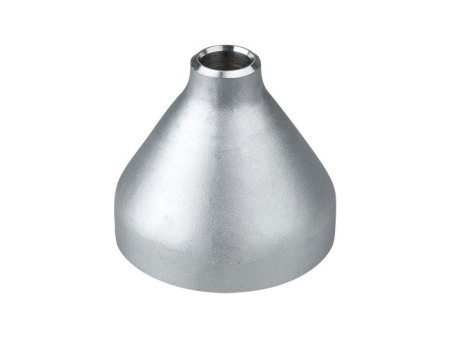
![Concentric Reducer]()
Concentric Reducer
-
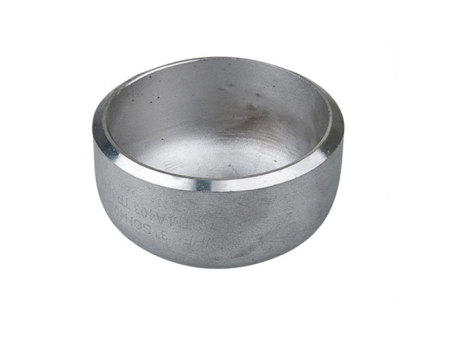
![Cap]()
Cap
-
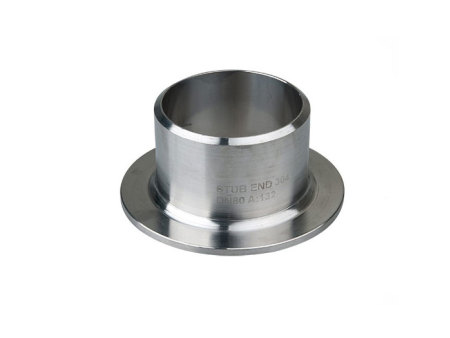
![Stub End]()
Stub End
-
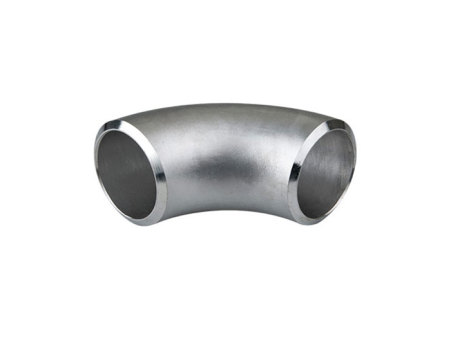
![LR Elbow 90°]()
LR Elbow 90°